WHAT WAS CLAIMED
Investment has fallen off a cliff under Labor.
OUR VERDICT
False. Official data shows investment has grown under Labor and hasn't experienced a sharp decline.
AAP FACTCHECK - A Liberal MP is falsely claiming investment has fallen off a cliff under Labor.
Official data shows investment has actually risen under the Albanese government and economists told AAP FactCheck there's no evidence of a sharp fall.
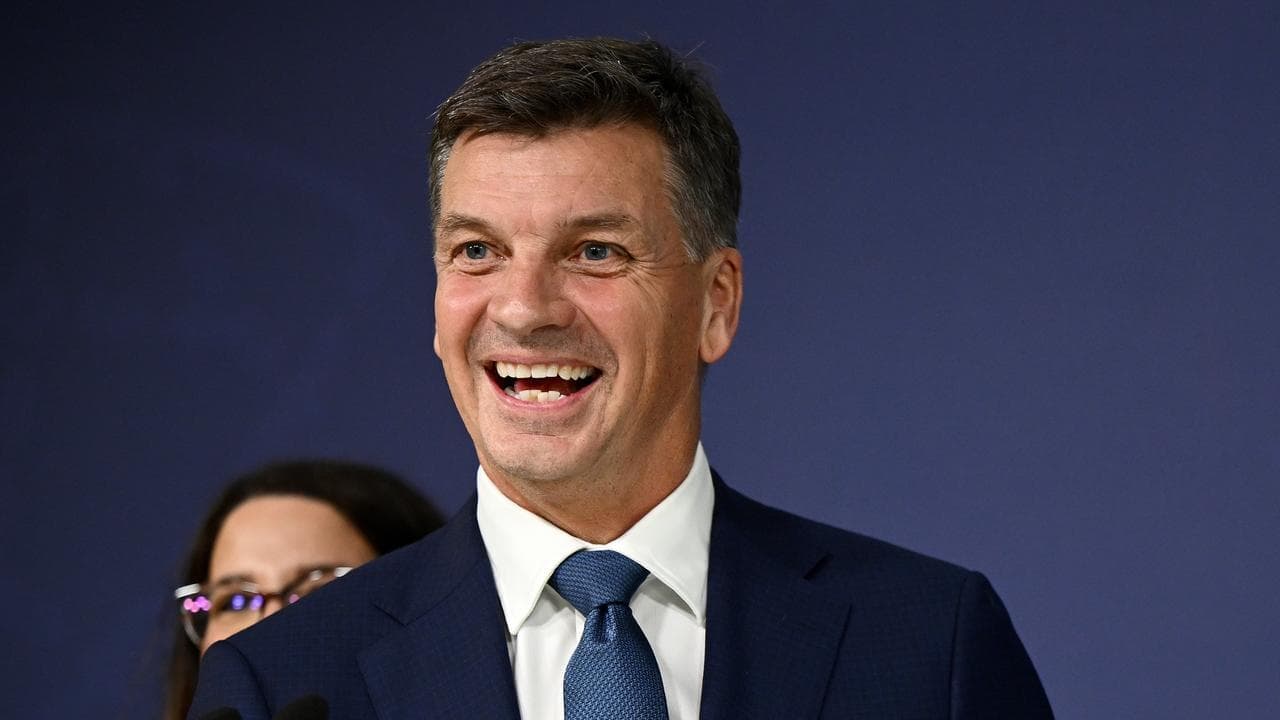
Shadow defence minister Angus Taylor made the claim in a Sky News interview in late October, arguing that Labor is presiding over "endless" environmental approvals.
"Investment has fallen off a cliff under Labor, and that includes, of course, the mining industry and other resource-based industries," Mr Taylor said during the interview.
"We need to make sure that we see investment increasing."

When asked for evidence for the claim, Mr Taylor's office pointed AAP FactCheck to a 2024 Minerals Council of Australia (MCA) analysis of major resource and energy projects that was featured in a press release.
Paraphrasing the release, Mr Taylor's office said the review found major mining projects were being "put in the too-hard basket because of Australia's deteriorating investment environment".
The press release claimed $68 billion worth of projects a year were dropping off the government's list of major resources and energy projects worth over $50 million.
It said Australia was missing out on potential investment, arguing a challenging investment environment had been created by "poor policy settings".
When asked for details of this analysis, the MCA supplied AAP FactCheck with a PowerPoint presentation. This showed it was looking at the period from 2013 to 2023 - a time largely covering the coalition's last term in office.

The figures were also based on the government's annual Resources and Energy Major Projects reports, which review the major resources and energy projects in Australia.
While this tracks large investment proposals, it is not a measure of business investment across the economy.
The figures also examine tens of billions of dollars in projects at an early planning stage that may not necessarily proceed due to a range of factors (p25).
The Australian Bureau of Statistics (ABS) tracks investment in Australia through its quarterly dataset on new capital expenditure.
The figures show business investment has increased under Labor, growing at an average quarterly rate of 1.03 per cent between June 2022 and June 2025, although investment has plateaued over the last 18 months.
Mining sector investment specifically also increased over that time period, with an average quarterly growth rate of 0.49 per cent since Labor came to government, although investment has declined slightly over the last nine months.
Stella Huangfu, a macroeconomist at the University of Sydney, said figures for new capital expenditure were a good starting point for analysing investment, but should be read alongside a separate measure of investment called fixed capital formation for a more complete picture.
Private gross fixed capital formation has also risen under Labor, growing at an average quarterly rate of 1.58 per cent, according to figures from the ABS.
Associate Professor Huangfu said the claim that investment has fallen off a cliff is "overstated", with the data pointing to a flattening out in investment activity "rather than a collapse".
"Looking at recent data, business investment in Australia has not 'fallen off a cliff'," Dr Huangfu said.
"It has moved sideways over the past year - with some quarters showing modest growth and others small declines - but there's no evidence of a sharp fall."
Economist Saul Eslake said that non-mining investment was "fairly weak" between the Global Financial Crisis (GFC) in 2008/9 and the onset of COVID-19 in 2019/20, but has since picked up noticeably.
This was partly due to "a rush to digitise" during the pandemic and the more recent uptake of artificial intelligence (AI).
Jakob Madsen, a macro-economics expert at the University of Western Australia, said Mr Taylor's claim is mistaken and that investment, including in mining, hasn't fallen sharply under Labor, notwithstanding weaker growth over the past 18 months.
Professor Madsen told AAP FactCheck that investment growth picked up after the pandemic as growth rates rebounded from lockdowns and the share market went up.
He said key investment categories, including machinery and equipment, intellectual property and buildings and structures, have all grown since mid-2022.

Over the past 18 months that investment growth has slowed markedly, something Prof Madsen said is a reflection of the current business cycle that has seen interest rates rise to reduce inflation, causing economic growth to slow.
"There's nothing unusual in that… it's more serious when it [investment] starts to drop strongly - that's where the alarm bells come out," Prof Madsen said. "There's no reason for alarm."
The particularly large increase in business investment Australia experienced over the decade to 2014 is characterised by what economists often call the mining investment boom.
Business investment then fell in the following years from those historic highs as mining construction projects were completed, signalling an end to what the Grattan Institute said (p1) in 2013 was the "investment phase" of the boom.
AAP FactCheck is an accredited member of the International Fact-Checking Network. To keep up with our latest fact checks, follow us on Facebook, Instagram, Threads, X, BlueSky, TikTok and YouTube.